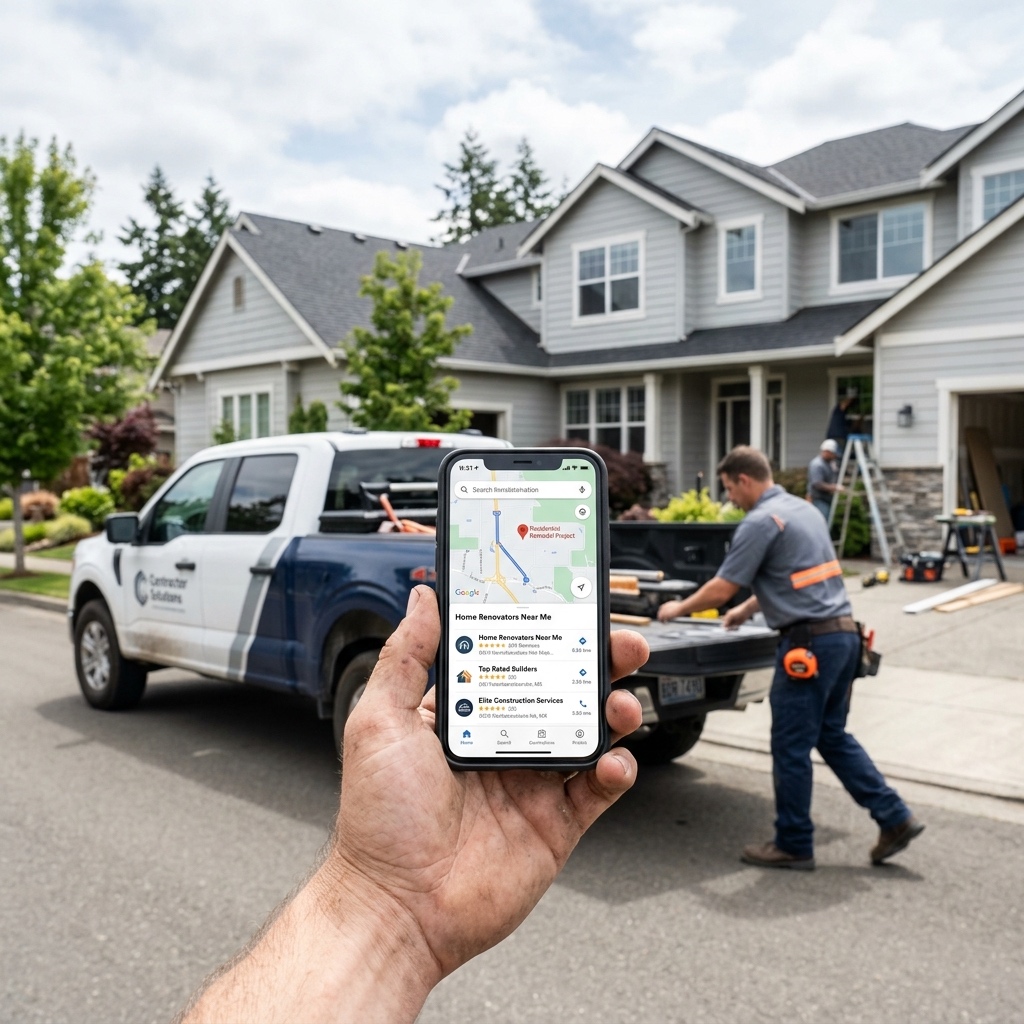
You built your contracting business on quality work and word-of-mouth referrals. But when a homeowner in your city types “roofing contractor near me” or “licensed electrician in [your town]” into Google, are you showing up, or is your competitor taking that call?
Local SEO for contractors is the single highest-ROI marketing investment most trade businesses overlook. Done right, it puts your company in front of homeowners and property managers at the exact moment they’re ready to hire. This guide covers everything you need to rank in your service area in 2026: Google Business Profile optimization, citation building, review strategy, and service-area landing pages — no fluff, just a proven playbook you can start executing today.
Why Local SEO Is Non-Negotiable for Contractors in 2026
Google processes more than 8.5 billion searches per day. A significant slice of those are local service queries — and contracting is one of the most searched service categories in the country. According to Google, 76% of people who search for something nearby on their smartphone visit a related business within a day, and 28% of those searches result in a purchase.
For contractors, that “purchase” is a booked estimate.
Here’s what makes local SEO uniquely powerful for trades businesses:
High purchase intent. Someone searching “HVAC repair contractor near me” isn’t browsing, they have a problem and need it solved now.
Compounding returns. Unlike paid ads that stop the moment your budget runs out, a well-optimized local presence keeps generating leads month after month.
Geographic specificity. You don’t need national reach, you need to dominate your city, county, or service radius. That’s a winnable game even for small and mid-size contractors.
The local search landscape centers on three core elements Google uses to rank contractors: relevance (does your business match the query?), distance (how close are you to the searcher?), and prominence (how well-known and trusted is your business?). Everything in this guide is designed to strengthen all three signals.
The Foundation: Google Business Profile Optimization for Contractors
Your Google Business Profile (GBP), the listing that appears in Google Maps and the local “3-Pack”, is the single most important local SEO asset your contracting company has. Most contractors have a GBP. Very few have one that’s fully optimized.
Claim, Verify, and Complete Every Field
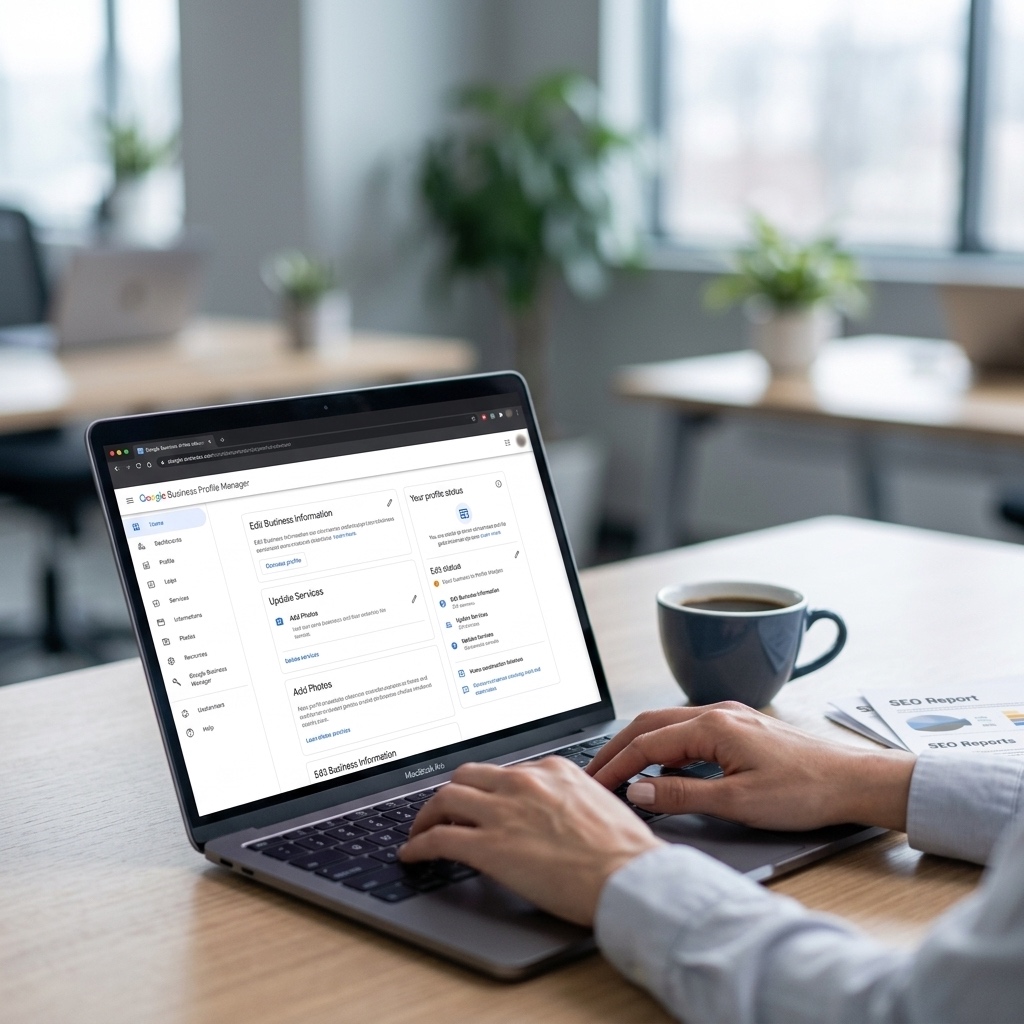
Start with the basics. Claim and verify your listing if you haven’t already. Then audit every field:
Business name: Use your legal business name exactly as it appears on your license. Don’t keyword-stuff it (e.g., “Mike’s Plumbing – Best Plumber in Dallas”) — Google penalizes this.
Primary category: Choose the most specific category available. “Roofing Contractor” outperforms the generic “Contractor.”
Secondary categories: Add up to nine additional categories that reflect your actual services (e.g., “Gutter Cleaning Service,” “Skylight Contractor”).
Service area: List every city, town, and zip code where you actively take jobs. Be accurate, serving areas where you don’t work will hurt conversions, not help rankings.
Business hours: Keep these current, including holiday hours. Mismatched hours erode trust.
Write a GBP Description That Works
Your business description (750 characters max) should naturally include your primary keyword, mention your service area, and highlight your competitive differentiator. Don’t waste space with generic phrases like “we are committed to excellence.” Instead, try:
“Licensed and insured roofing contractor serving Dallas, Plano, and Frisco since 2008. KangoMedia Roofing specializes in storm damage repair, full roof replacements, and commercial flat roofing — backed by a 10-year labor warranty and 200+ five-star reviews.”
Specific. Credible. Local.
Use GBP Posts, Photos, and Q&A Strategically
Google Business Profile is not a “set it and forget it” tool. Active profiles consistently outrank dormant ones.
Posts: Publish at least one GBP post per week. Promote seasonal offers, completed projects, or helpful tips. Each post is an opportunity to use keyword variations naturally.
Photos: Businesses with photos receive 42% more direction requests and 35% more website clicks, according to Google. Upload before/after project photos, your team, your trucks, and your equipment. Geo-tag images when possible using tools like GeoImgr.
Q&A: Seed your own Q&A section with questions your customers actually ask (“Do you offer free estimates?” “Are you licensed in Texas?”). Answer them thoroughly — this is indexed content Google reads.
Citation Building: Establishing Trust Across the Web
A citation is any online mention of your business’s name, address, and phone number (NAP). Search engines use citations to verify that your business is legitimate and where you claim to be. Inconsistent NAP data — even something as minor as “St.” vs. “Street” — can dilute your local rankings.
Start with the Core Directories
Every contractor needs accurate, consistent listings on these platforms at minimum:
- Google Business Profile
- Yelp
- Angi (formerly Angie’s List)
- HomeAdvisor
- Houzz
- Better Business Bureau (BBB)
- Bing Places
- Apple Maps
- Facebook Business
- Yellow Pages
Beyond the general directories, pursue industry-specific citations like the National Association of Home Builders (NAHB) directory, your state’s contractor licensing board, and local Chamber of Commerce listings. These niche citations carry strong relevance signals for contractors specifically.
Audit and Fix NAP Inconsistencies
Use a tool like BrightLocal, Whitespark, or Moz Local to audit your existing citations and identify inconsistencies. Correcting these is unsexy work, but the ranking lift from NAP consistency is real and measurable. Aim for 40–60 high-quality, consistent citations before pursuing quantity.
Review Strategy: The Ranking Factor Contractors Underestimate
Reviews are one of the most powerful local ranking signals Google uses, and arguably the most influential factor in whether a prospect calls you or your competitor. According to BrightLocal’s 2024 Local Consumer Review Survey, 98% of consumers used the internet to find information about local businesses, and 87% read online reviews for local businesses.
For contractors, social proof is everything. A roof replacement or kitchen remodel is a high-trust purchase. Reviews eliminate hesitation.
Build a System to Generate Reviews Consistently
One-and-done review collection doesn’t work. You need a repeatable process:
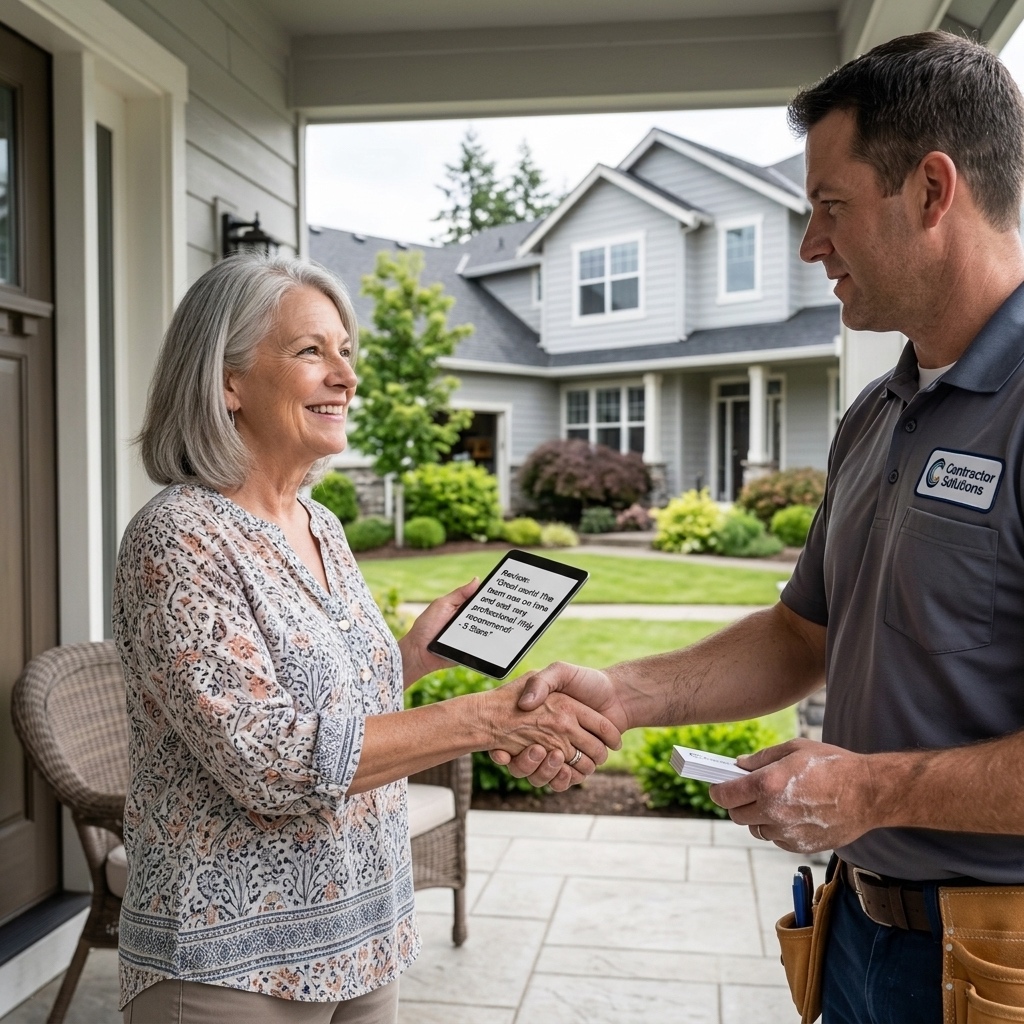
Ask at the right moment. The best time to request a review is immediately after project completion, when customer satisfaction is highest.
Make it frictionless. Text or email a direct link to your Google review page. Don’t make customers search for it.
Train your crew. Every foreman and project manager should know how to ask for a review — and feel empowered to do it.
Follow up once. A single polite follow-up email or text 3–5 days later can recover reviews from satisfied customers who forgot.
Respond to Every Review — Especially Negative Ones
Responding to reviews signals to Google that your business is active and engaged. More importantly, it demonstrates professionalism to potential customers reading your profile.
For positive reviews, thank the customer by name and reference the specific project. For negative reviews, respond calmly, acknowledge the concern, and offer to resolve it offline. A gracious response to a 1-star review can actually increase trust — it shows you stand behind your work.
Never incentivize reviews with discounts or gifts. Google prohibits this, and the short-term gain isn’t worth the risk of profile suspension.
Service-Area Landing Pages: Your Hyper-Local SEO Weapon
This is where most contractors leave serious money on the table. A single, generic homepage is not enough to rank for location-specific searches across multiple cities and towns.
If you serve 10 cities, you need dedicated landing pages for each one, pages built around localized keywords like “bathroom remodeler in Naperville” or “commercial electrician serving Schaumburg, IL.”
What Makes a High-Ranking Service-Area Page
A service-area page that actually ranks is not a copy-paste template with the city name swapped out. Google penalizes duplicate content aggressively. Each page should include:
Unique, locally relevant content. Reference local landmarks, neighborhoods, building codes, or regional weather issues relevant to your trade. A roofing contractor in Houston should mention hurricane-resistant materials; one in Minneapolis should address freeze-thaw cycles.
Location-specific keywords in the H1, meta title, meta description, and naturally throughout the body.
Embedded Google Map showing your service area or office location.
Local schema markup (LocalBusiness schema with address, phone, service area, and review data).
Location-specific customer testimonials when available.
A clear, prominent CTA — phone number, contact form, or online scheduling.
Organize Your Site Architecture for Local SEO
A clean URL structure signals geographic relevance to Google:
kangomedia.com/services/roofing/dallas/
kangomedia.com/services/roofing/plano/
kangomedia.com/services/roofing/frisco/
Interlink your service-area pages to each other and back to your main services page. This distributes link equity across your local pages and helps Google understand your geographic coverage.
Technical Local SEO: The Checklist Contractors Miss
Even perfect content can be undermined by technical issues. Run through this checklist:
Mobile optimization: Over 60% of local searches happen on mobile. Your site must load fast and display perfectly on phones.
Page speed: Google’s Core Web Vitals are a ranking factor. Use PageSpeed Insights to identify and fix slowdowns.
LocalBusiness schema: Implement structured data markup so Google can correctly categorize and display your business information.
HTTPS: A secure site is a baseline ranking signal. If you’re still on HTTP, fix this immediately.
NAP in footer: Your business name, address, and phone number should appear in your website footer — consistent with every directory listing.
Frequently Asked Questions About Local SEO for Contractors
How long does local SEO take to show results for contractors?
Most contractors begin seeing measurable movement in Google Maps rankings within 60–90 days of consistent optimization efforts. Full results — especially for competitive service areas — typically take 4–6 months. Unlike paid ads, however, those results compound over time rather than disappearing when you stop paying.
Do I need a physical office address to rank in Google Maps?
Not necessarily. Google allows service-area businesses to hide their physical address and set service areas instead. However, having a verified physical address in the city where you want to rank does strengthen your local signals. If your business is home-based, a virtual office or coworking address in your target market may help — but verify this complies with Google’s guidelines.
How many Google reviews do I need to rank locally?
There’s no magic number, but volume, recency, and response rate all matter. In competitive markets, contractors with 50+ reviews and a 4.5+ star rating significantly outperform those with fewer. More importantly, a consistent stream of new reviews signals to Google that your business is active and trusted.
What’s the difference between SEO and Google Local Services Ads for contractors?
Google Local Services Ads (LSAs) are paid placements that appear above organic results and the 3-Pack. They require a background check and Google’s “Google Screened” badge. LSAs generate leads quickly but cost money per lead. Local SEO generates organic traffic and leads for free (after the investment in time or an agency) and compounds over time. The best strategy for most contractors is running both simultaneously.
Should contractors hire an SEO agency or do it themselves?
Many of the foundational tactics — GBP optimization, review requests, citation cleanup — can be managed in-house with the right guidance. However, technical SEO, content strategy, link building, and ongoing campaign management are time-intensive and expertise-dependent. Most contractors find that partnering with a specialist agency delivers faster results and a stronger ROI than a DIY approach while they focus on running their business.
Start Winning More Local Jobs in 2026
Local SEO for contractors isn’t a one-time project — it’s an ongoing system that builds your online authority, fills your pipeline with qualified leads, and compounds in value the longer you invest in it. The contractors dominating their local markets didn’t get there by accident. They built the right foundation: an optimized Google Business Profile, consistent citations, a steady stream of genuine reviews, and location-specific pages that speak directly to their ideal customers.
The playbook is here. The question is whether you execute it — or keep letting your competitors take the calls that should be yours.
Ready to dominate local search in your service area? KangoMedia works exclusively with contractors and trades businesses to build local SEO systems that generate consistent, qualified leads. Get your free local SEO strategy at kangomedia.com and find out exactly where your biggest ranking opportunities are hiding.